
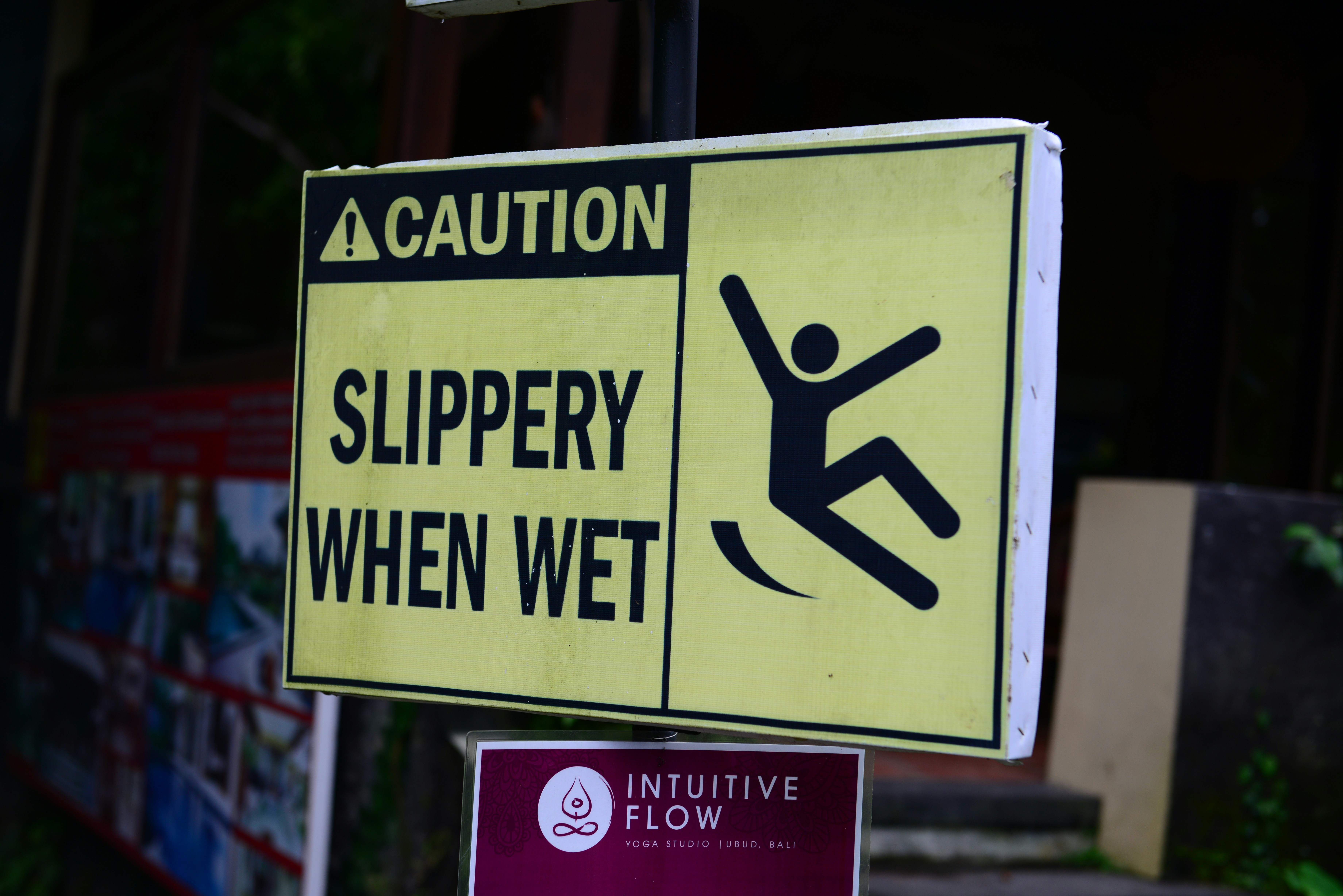
Slip‑and‑fall accidents happen every day in California — in grocery stores, apartment complexes, parking lots, restaurants, and workplaces. While some falls are unavoidable, many occur because a property owner failed to maintain safe conditions. Under California law, these cases fall under premises liability, which requires property owners to keep their premises reasonably safe for visitors.
According to legal analysis from Nolo, California slip‑and‑fall claims focus heavily on fault and negligence, including whether the property owner knew or should have known about a dangerous condition. Understanding these rules can help you protect your rights if you’ve been injured.
What Counts as a Slip‑and‑Fall Claim in California?
A slip‑and‑fall claim arises when someone is injured because of a dangerous condition on someone else’s property. These conditions often include:
- Wet or slippery floors
- Uneven pavement or flooring
- Poor lighting in hallways or stairwells
- Loose rugs or carpeting
- Cluttered walkways
- Broken handrails or steps
Under California premises liability law, property owners owe a duty of care to maintain reasonably safe conditions. If they fail to do so, they may be legally responsible for injuries.
California’s Legal Standard for Slip‑and‑Fall Liability
To win a slip‑and‑fall case in California, you must show that the property owner was negligent. According to Shouse Law Group’s explanation of California premises liability, a plaintiff must prove that the owner:
- Knew or should have known about a hazardous condition
- Failed to repair, warn about, or protect against the hazard
- Caused the dangerous condition through their own actions
- Allowed the hazard to remain long enough that they should have discovered it
This is known as the “knew or should have known” standard — a key concept in California slip‑and‑fall law.
Common Locations Where Slip‑and‑Fall Accidents Occur
Slip‑and‑fall injuries can happen anywhere, but certain locations are especially common:
- Grocery stores and supermarkets
- Apartment complexes and rental properties
- Restaurants and bars
- Hotels and resorts
- Parking lots and garages
- Retail stores and shopping malls
Each of these locations has specific safety obligations under California law.
Evidence That Strengthens a Slip‑and‑Fall Claim
The stronger your evidence, the more likely you are to receive fair compensation. Helpful evidence includes:
- Photos or videos of the hazard
- Incident reports filed with the business
- Witness statements
- Medical records documenting your injuries
- Surveillance footage
- Proof of prior complaints about the hazard
Surveillance footage is especially powerful because it can show how long the hazard existed before your fall.
California’s Statute of Limitations for Slip‑and‑Fall Cases
According to Nolo’s overview of California slip‑and‑fall laws, the statute of limitations for most premises liability cases is two years from the date of injury.
However, there are exceptions:
- Claims against government entities require filing a government claim within 6 months.
- Claims involving minors may have extended deadlines.
Missing a deadline can permanently bar your claim, so it’s important to act quickly.
When Businesses Are Automatically Liable
Some situations create strong presumptions of negligence, including:
- Violations of building codes or safety regulations
- Failure to clean up spills within a reasonable time
- Ignoring repeated complaints about hazards
- Lack of required lighting or signage
If a business violates a safety law, this may constitute negligence per se, making your case significantly stronger.
How Infinity Law Group Helps Slip‑and‑Fall Victims
Our team assists clients by:
- Investigating the cause of the fall
- Collecting evidence and witness statements
- Obtaining surveillance footage
- Working with medical experts
- Negotiating with insurance companies
- Preparing cases for litigation when necessary
You can learn more about our approach by visiting our California Personal Injury page.
Frequently Asked Questions
What if I was partially at fault for my fall?
California follows comparative negligence, meaning you can still recover compensation even if you were partly responsible.
Do I need to report the fall to the business?
Yes. Filing an incident report creates documentation that can support your claim.
What if the property owner fixes the hazard after my fall?
Repairs do not erase liability. In fact, they may support your argument that the condition was dangerous.
Can I sue my landlord for a slip‑and‑fall?
Yes — if the landlord failed to maintain safe conditions or ignored known hazards.
Conclusion
Slip‑and‑fall injuries can lead to significant medical bills, lost wages, and long‑term pain. California law protects victims by holding property owners accountable when they fail to maintain safe conditions. Understanding your rights — and acting quickly — can make a major difference in the outcome of your case.
If you were injured in a slip‑and‑fall accident, the attorneys at Infinity Law Group are here to help. Contact us through our online form for guidance and support.
.png)

.png)
.png)

